



.webp)


Help our experts understand you better by filling our 2-Minute Form, to find the right education loan
Get instant loan offer suitable to your profile !


Academic & General IELTS by IDP
Discover the complete IELTS syllabus, including listening, reading, writing, and speaking. Detailed insights, test tips, and resources to ace your IELTS exam.
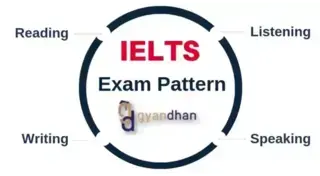
Understanding the IELTS exam pattern and syllabus is very important for candidates who want higher IELTS band scores. Before we start with the IELTS syllabus, make sure you have gone through the types of IELTS exams. Once you have a clear picture of the IELTS exam pattern, you can easily work through your IELTS syllabus. Let us look at the IELTS exam pattern first:

The following table outlines the IELTS exam pattern, with the details of each section:
| Section | Duration | Number of Questions |
|---|---|---|
|
Listening |
30 minutes (+10 minutes transfer time on paper) |
40 |
|
Reading |
60 minutes |
40 |
|
Writing |
60 minutes |
2 tasks |
|
Speaking |
11–14 minutes |
3 parts |
The IELTS exam subjects for the 2026 syllabus are explained in detail below, along with the duration. We recommend going through each of them:
The Reading section consists of 3 long passages with 40 questions that test a range of comprehension skills. Note that, unlike Listening, no extra transfer time is given, all answers must be written within the 60 minutes. Common question types include:

IELTS Academic – Reading Syllabus:
IELTS General Training – Reading Syllabus:
The question format remains the same for both versions, but Academic Reading is more complex.
The Listening section has four parts with 40 questions in total. Each part includes a mix of conversations and monologues. You hear each recording only once, so stay attentive throughout. Question types include:
The IELTS subjects for the listening syllabus are the same for Academic and General Training. Please note that, in the paper-based test, an extra 10 minutes is given after the 30-minute section for transferring your answers.
The Writing section consists of two tasks. Please note that Task 2 carries more weight than Task 1.
IELTS Academic – Writing Syllabus:
IELTS General Training – Writing Syllabus:
The Speaking module tests communication skills, fluency, and pronunciation. It is divided into three parts:
The IELTS subjects for the speaking syllabus are the same for Academic and General Training.
To help you target 8+ bands in the IELTS exam, GyanDhan has launched a Free IELTS Preparation Course with IELTS exam topics and detailed explanations across 30 episodes. Make sure you go through them all for the best results.
It is very important to be thorough with the IELTS exam syllabus if you are planning to score high. Make sure your reading, writing, listening, and speaking skills are well practised and aligned with the IELTS exam syllabus. Practise regularly, learn to manage your time, and get familiar with the question types asked in the exam. To support your preparation, GyanDhan offers a free IELTS course with structured lessons, mock tests, and expert tips. Stay dedicated to your goals and you can reach your target IELTS score.

Yes, the Reading and Writing sections differ. The Listening and Speaking sections are the same for both.
There are no fixed topics, but the general guidelines are as follows:
Here is an estimate for each section:
No, the overall format remains the same, but question topics vary in each test.
Yes. IELTS is available in two delivery modes — computer-delivered and paper-based at authorized test centres, with the same format and content in both. In some regions, IELTS Academic can also be taken online at home; availability varies by location, so check the official IDP IELTS or British Council site for the options in your area.

Our free tools will help you out.
A smart algorithm that guides every step of your education journey.

See your loan options upfront: quick, free, and accurate.
Check Eligibility
Determine your EMIs and repayment schedules before committing to a student loan.
Calculate Now
Project your potential future earnings and compare countries based on return on investment.
Estimate Now
Get insights on income, employability, costs, and top recruiters of upto 4 universities.
Compare Now
Get your Statement of Purpose evaluated on matter, grammar, readability using Natural language processing.
Submit SOP
Convert your percentage or 10-point CGPA to GPA score with just a single click.
Convert Now